Dismantling the Unverified Narratives of Activist Journalism
The accounts shared by authors like Joss Sheldon on their blogs represent a familiar phenomenon: travel writing masquerading as objective journalism, only to deliver a pre-packaged ideological narrative. Sheldon does not set out to critique complex geopolitical realities; instead, he seeks to validate a deeply one-sided worldview, effectively preaching to the converted. His willingness to swallow unverified anecdotes whole—simply because they support the „apartheid“ label—is a textbook example of severe confirmation bias.
Consider his retelling of an encounter in the Jalazone refugee camp:
“This eloquent young man spent two years in an Israeli prison without even knowing why he had been arrested.”
To the uninitiated reader, this paints a picture of a dystopian, lawless system where the Israel Defense Forces (IDF) arbitrarily abduct Palestinian minors simply on a whim. Sheldon completely omits the rigorous procedural framework of Israeli military law: every planned arrest requires multi-layered administrative approval, a judicial warrant, and a mandatory appearance before a military judge within 24 to 48 hours. Even under administrative detention, automatic judicial reviews are legally mandated every six months. The romanticized claim that an articulate student could languish in a cell for two years without a single inkling as to why is exposed as a logistical and legal impossibility. It relies entirely on a „Trust me, bro“ methodology.
To double down on his narrative, Sheldon attempts to shield his anecdotal claims behind institutional authority, quoting a report by Defence for Children International – Palestine (DCI-P) regarding the alleged systemic mistreatment of „Palestinian Child Prisoners.“ However, when confronted with the actual legal statutes and operational realities, this seemingly damning evidence collapses like a house of cards.

1. The Fiction of the 16-Year-Old Adult
The report Sheldon heavily relies upon states categorically that Palestinian children are “treated as adults from the age of 16, in contrast to the situation under Israeli domestic law.”
- The Reality: This claim is demonstrably false and vastly outdated. As early as 2011, the IDF enacted Military Order 1676, which officially raised the age of majority in the West Bank’s military justice system from 16 to 18.
- Palestinian youths are legally recognized as minors, granting them specific protections, separate juvenile courtrooms, and specialized judges, mirroring provisions within Israeli domestic law. Peddling a discarded, decade-old statute reveals that the author is merely copy-pasting archaic grievances without performing basic fact-checking.
2. The Myth of the Sub-Rosa Interrogation
The text asserts that interrogations are systematically unrecorded, leaving minors helpless against forced confessions written in Hebrew—a language they cannot comprehend.
- The Reality: This narrative directly violates Military Order 1745, which mandates the strict audiovisual (video and audio) recording of police interrogations involving minors in the West Bank. These lückenlos recordings become a permanent part of the official case file.
- Furthermore, strict legal precedents require all interrogations to be conducted in the suspect’s native language (Arabic), and any statement presented for a signature must be fully translated or drafted in Arabic. Because defense attorneys routinely review these video tapes to throw out non-compliant evidence, no professional investigator would risk sabotaging a high-stakes security case by forcing a suspect to blindly sign a Hebrew document.
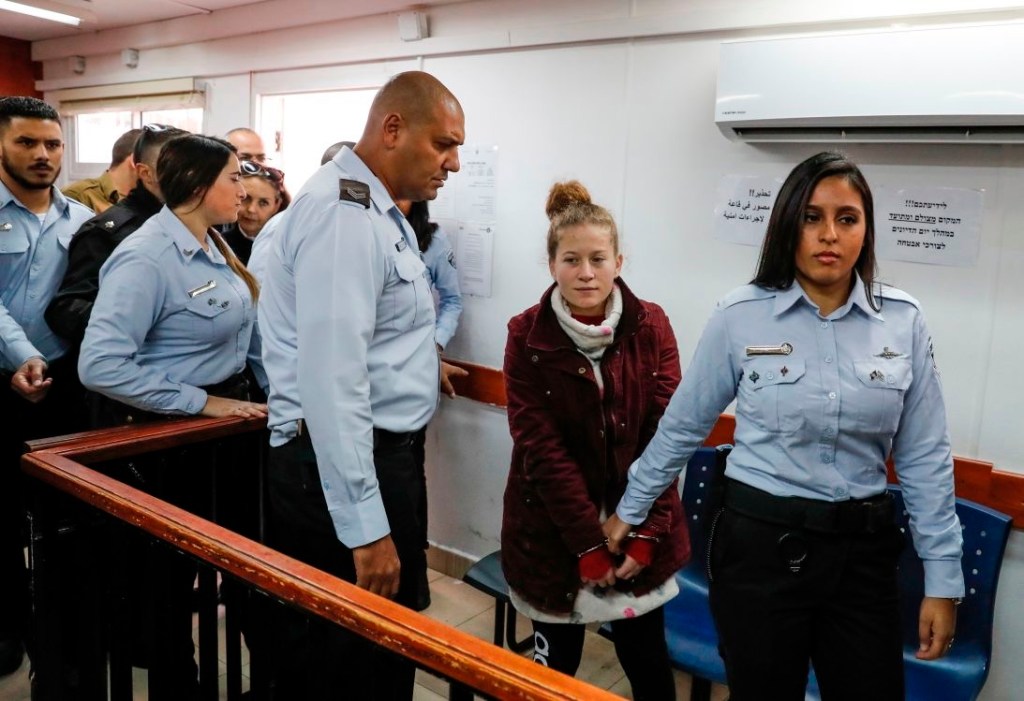
3. The 20-Year Smoke Screen for Stone-Throwing
Sheldon reaches his emotional climax by shocking his audience with the claim that children face a “maximum sentence of twenty years’ imprisonment under Israeli Military Ordinance 378” for throwing stones.
- The Reality: This is an egregious manipulation of statutory maximums. A 20-year sentence does exist in the criminal code (identically to civilian criminal law in western democracies), but it is legally reserved for cases demonstrating explicitly lethal intent—such as dropping boulders or launching heavy stones onto highways to cause high-speed civilian vehicle crashes and mass casualties.
- For standard stone-throwing during riots or demonstrations, the actual sentencing matrix for minors typically involves a few months of detention, fines, or suspended sentences. Presenting a lethal-intent felony maximum as the baseline punishment for throwing a pebble is pure distortion.
4. Denying the Operational Logic of Nighttime Arrests
Finally, the report laments the terrifying nature of early-morning arrests carried out by heavily armed soldiers in family homes.
- The Reality: The author completely ignores the tactical why. If Israeli authorities attempted to execute a standard arrest warrant in a highly volatile, weaponized environment like the Jalazone camp during broad daylight, it would instantly trigger mass riots, armed skirmishes, and inevitable casualties on both sides.
- Conducting operations under the cover of night leverages the element of surprise, allowing the IDF to apprehend the target cleanly and withdraw swiftly without escalating into bloodshed. Paradoxically, the very tactic criticized as harassment is engineered to preserve civilian lives.
Conclusion
Joss Sheldon’s blog entries do not constitute investigative journalism; they are an exercise in selective compilation. By regurgitating unverified, outdated mouth-to-mouth narratives from politically motivated NGOs while completely blinding himself to the highly regulated, documented legal framework on the ground, he constructs a fictional reality. His writing serves only to flatter the prejudices of an audience that prefers a comforting, binary fable of absolute villains and unblemished victims over the gritty, complex realities of counter-terrorism and security infrastructure.
 De Republica