Part 5: The Myth of the ‘Bought’ President – How Joss Sheldon Distorts the Founding of Israel and the Truman Era
CHAPTER SIX
Israel was well-established. It had a Jewish majority. But it was surrounded by hostile forces. It needed international support. And it got it from the USA – from President Truman (who believed
„Jews were “very selfish”), and Richard Nixon (who called us “obnoxious”).
That special relationship has been worth hundreds-of-billions of dollars. But it was built on malign foundations: President Reagan admitted that he only supported Israel for “strategic” reasons. President Biden only backed the Zionist State because it helped “to protect America’s interests in the region”.
Those schmucks were treating Israeli Jews as though they were nothing more than political pawns, expecting them to kill and be killed in the service of American “interests”.
That’s seriously antisemitic.“
Auszug aus: Sheldon, Joss. „The ZIONISTS who HATE JEWS.“ Apple Books.
Dieses Material ist möglicherweise urheberrechtlich geschützt.
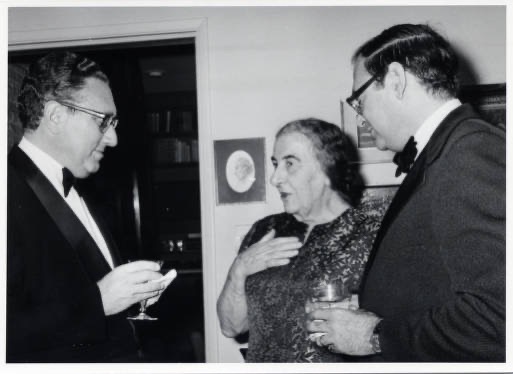
Having rewritten the expulsion of the Oriental Jews as a Zionist conspiracy in the previous chapters, Joss Sheldon turns his attention to the international stage in Chapter 6. His central question is: How did the young State of Israel manage to secure the geopolitical support of the superpower, the USA?
Sheldon’s answer is as simplistic as it is classically anti-Semitic: through manipulation, financial pressure and a corrupting lobby.
To support this thesis, he once again resorts to his tried-and-tested method: he takes historical quotations from Harry S. Truman out of context, glosses over the dramatic power struggles within the US administration, and transforms one of the most complex diplomatic decisions of the 20th century into a cheap conspiracy narrative.
Let us dismantle Sheldon’s nonsense in the light of the historical facts.
1. The Truman quote and the art of cherry-picking
Sheldon opens his chapter on the USA with a deliberate provocation:
“And it got it from the USA – from President Truman (who believed Jews were ‘very selfish’) […]”
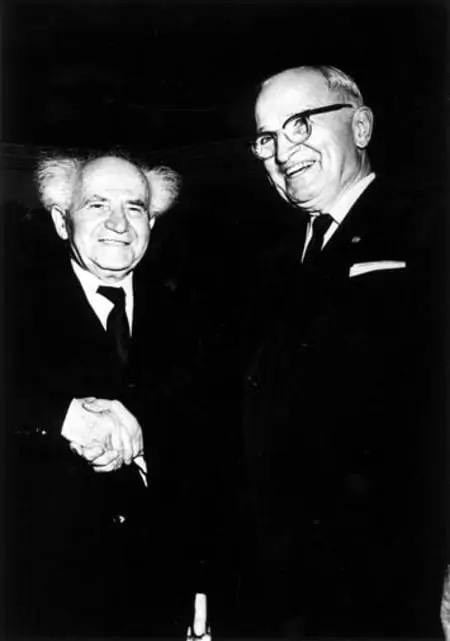
Sheldon’s quotation trick: Here, Sheldon quotes a private entry from Truman’s diary dated 21 July 1947. He pretends that this half-sentence was the quintessence of Truman’s attitude towards the Jewish people and the key to his foreign policy.
The historical context: Truman was a man from the American South, whose language was often shaped by the prejudices of his time. However, in the same diary and in numerous letters, he simultaneously expressed deep horror at the Holocaust and was profoundly outraged by the indifference of the European powers towards the survivors in the DP camps.
The distortion: Sheldon does not use the quote to analyse Truman’s complex, often contradictory personality, but to make an anti-Semitic point: Even Truman didn’t like them, but they forced him to.
To give you an overview what exactly happend:
The dilemma between words and deeds
- A clear contradiction: Historians emphasise the stark contrast between Truman’s private frustration and his political legacy. Despite these harsh words, Truman officially recognised the State of Israel in 1948, just eleven minutes after its establishment.
- Pragmatism over emotion: Scholars often interpret the entry as evidence that Truman was able to set aside personal grievances when it came to geopolitical decisions and humanitarian aid.
Contextualising anti-Semitism
- A product of his time and background: Many biographers (such as Alonzo Hamby) attribute the remarks to Truman’s rural upbringing in Missouri. Such prejudices were widespread in mid-20th-century America amongst his social class.
- Political pressure: The entry was written at the height of the conflict over Jewish refugees following the Holocaust. Historians see the text as an outlet for an overburdened president who was under immense pressure from lobby groups and political advisers.
Psychological relief (letting off steam)
The diary as an outlet: Truman’s biographers point out that he often used his diary to vent unfiltered anger and frustration at political opponents, allies and ethnic groups. The entries often reflect a momentary emotional reaction rather than a lasting philosophical conviction.
2. The myth of the all-powerful ‘Zionist lobby’
According to Sheldon’s logic, there was only one reason why the US de facto recognised the State of Israel in 1948 within 11 minutes of its declaration of independence: pressure from Zionist donors and voters.
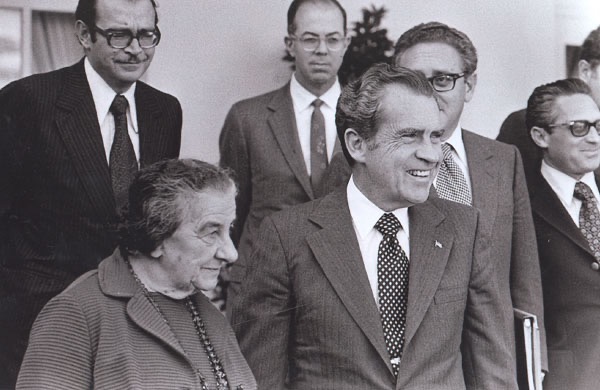
In doing so, Sheldon is playing straight into the classic anti-Semitic stereotype of Jewish power behind the scenes, which controls US presidents like puppets.
What the White House and State Department files (1947–1948) actually reveal:
- The bitter resistance of the establishment: In 1948, Truman acted against almost his entire foreign and security policy establishment. The US State Department, under the highly respected Secretary of State George C. Marshall, the Department of Defence and the CIA were strictly opposed to the recognition of Israel.
- Marshall argued that recognition would jeopardise relations with the Arab oil-producing states and draw the Soviet Union into the region.
- In a legendary meeting on 12 May 1948, Marshall even threatened Truman that he would vote against him in the next election should he recognise Israel.
- Truman’s actual motives: Truman decided to recognise Israel for two main reasons:
- Humanitarian conviction: Truman was deeply shaken by the plight of the 250,000 Jewish Holocaust survivors who were stranded in European DP camps because neither Britain nor the US was willing to take them in. He saw the Jewish state as the only practical solution to this catastrophe.
- Reality under international law: Truman recognised that the UN General Assembly had laid the legal foundation with Resolution 181 (the Partition Plan) on 29 November 1947, and that the British Mandate had irrevocably ended on 14 May 1948.
The facts: Had the Zionist lobby been as all-powerful as Sheldon suggests, it would not have had to fight for every millimetre of ground against the united front of the US State Department, the Pentagon and the intelligence services.
3. The omission of geopolitical dynamics (the Cold War)
In his account, Sheldon completely overlooks the fact that by 1948 the Cold War was already in full swing.
- The role of the Soviet Union: It was not only Truman who recognised Israel – the Soviet Union under Joseph Stalin was the first major power to recognise Israel de jure on 17 May 1948. Stalin hoped that the socialist-leaning Yishuv would drive a wedge into British influence in the Middle East. Furthermore, the weapons crucial to Israel’s survival in the War of Independence came from Czechoslovakia – with Moscow’s express permission.
- Sheldon’s blind spot: Because the fact that the Soviet Union provided massive support for Israel’s founding does not fit at all into Sheldon’s narrative of the ‘US imperialist conspiracy’, this central historical fact is simply glossed over in his book.
Conclusion: Reducing history to prejudice
Joss Sheldon’s Chapter 6 is a textbook example of how ideologues write history. Complex geopolitical decisions, the struggle over the post-war order, humanitarian crises and the diplomatic power struggle at the onset of the Cold War are reduced to a single anti-Semitic formula: money, puppet-masters and manipulation.
By narrowing Truman’s historic decision down to the influence of alleged Zionist puppet-masters, Sheldon not only undermines US diplomacy but also once again peddles the oldest narrative of anti-Semites: that world politics is steered from the shadows by Jewish powers.
Here, too, a glance at the published Foreign Relations of the United States (FRUS) files from 1948 is more than enough to expose Sheldon’s myth-making for what it is – propagandistic rubbish.
 De Republica
Hinterlasse einen Kommentar