Seit 2010 lebe ich in Cork. „Either you love it or you hate it, there’s nothing in between.“ Bei mir war es mit Cork Liebe auf den ersten Blick. Viel ist in den Jahren passiert und manchmal war es nicht ganz leicht, aber ich habe es nie bereut. Auf diesem Blog schreibe ich über Cork, Irland, über Gutes und weniger Gutes. Da mich Politik immer interessiert hat und ich auch involviert war, ist mein Blick kritisch und manchmal weniger kritisch und ich hoffe mein Blog hilft dem Einen oder Anderen uns (Iren) besser zu verstehen. Was mir auch am Herzen liegt ist die Klischees die Einige haben zu entkräften.
Before I moved to Ireland in 2010, I had been studying Irish history in depth since my youth. I read the works of Irish writers; I was particularly deeply moved by Liam O’Flaherty’s novel ‘Famine’ (published in German as ‘Zornige grüne Insel’), which depicts the fate of a family during the Great Famine. I was equally influenced by the film ‘Cassidy, the Rebel’, based on the autobiographies of Seán O’Casey – whose books I later bought here in Ireland.
At the time, however, I didn’t know much about the Jewish history of Ireland. I was pleasantly surprised when, at Merchant’s Quay in Cork, a rabbi hurried past me and, whilst on the bus, I observed a Jewish man – recognisable by his kippah – sitting quite naturally next to a Muslim woman. This was a sense of normality in public spaces that I’d previously only experienced in Vienna, when travelling through Jewish neighbourhoods on my way to a job interview, but never in Germany.
My interest in the subject was, however, piqued in a painful way when I went shopping in Cork city centre one Saturday. It was shortly after the Mavi Marmaraincident. The streets were full of demonstrators chanting anti-Semitic slogans. On stages, Israel was condemned across the board, and of course representatives of BDS and IPSC were also present. Whilst BDS activists were making their way through the shops, arbitrarily labelling goods from Israel, IPSC leaders stood outside the shops shouting calls for a boycott.
I tried to strike up a conversation with these people, but was completely ignored – an experience that really shouldn’t have come as a surprise to me: anti-Semites aren’t interested in a genuine exchange of views. They do not care what Jews do or do not do; the mere existence of Israel merely serves as a licence for them to vent their hatred of Jews on the streets. When I asked why they did not demonstrate with the same vehemence against the crimes in Sudan or Iran, I received the curt reply that, after all, one ‘cannot concern oneself with everything’. Nobody was demanding that – but had they looked more closely at geopolitics, they would have realised that, by regional standards, the Mavi Marmara incident was more akin to a neighbourhood dispute. And a look at international maritime law would have shown that the Israeli blockade was legally justified – however much that might have displeased these activists.
These experiences gave me a great deal to think about. I began to systematically study the Jewish history of this country. My library contained numerous works on the War of Independence and the Civil War, but there was hardly anything on Jewish life in Ireland – as if Jews had never existed here. It was a painstaking search for clues, but the deeper I dug, the more I unearthed.
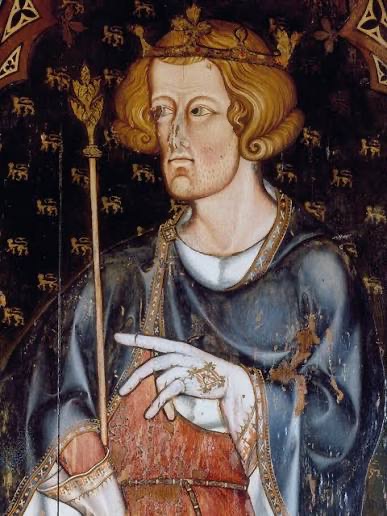
By 1232, there was presumably already an established Jewish community, as a royal charter issued by Henry III on 28 July 1232 appointed Peter de Rivaux to the office of treasurer and granted him ‘custody of the King’s Jewish community in Ireland’ (custodiam Judaismi nostri in Hibernia). The charter instructed all Jews in Ireland to obey Peter as the king’s administrator. This community probably lived in or near Dublin. Furthermore, the Dublin ‘White Book’ of 1241 contains a deed of conveyance with the clause ‘vel in Judaismo ponere’, which explicitly prohibited resale to Jews. Following the Expulsion Edict of 1290, by which King Edward I expelled all Jews from England, the Jews living in the English Palearound Dublin presumably also had to leave the country.
It was not until the time of Oliver Cromwell, who lifted the ban on Jewish settlement in the Crown’s territories, that Jewish life began to flourish again in Ireland. As early as 1660, the first synagogue community was established near Dublin Castle. In the centuries that followed, Jews continued to immigrate – particularly from Eastern Europe, fleeing the Tsarist pogroms. For many of them, Ireland, just like the British port authorities, was a stopover on the way to the New World.
XII. And be it enacted, That the Society of Friends commonly called Quakers, and also Persons professing the Jewish Religion, may continue to contract and solemnize Marriage according to the Usages of the said society and of the said Persons respectively; and every such Marriage shall be deemed good in Law, provided that the Parties to such Marriage be both of the said Society, or both Persons professing the Jewish Religion respectively; provided also, that Notice to the Registrar shall have been given, and the Registrar’s Certificate shall have issued in manner herein-after provided.
Jewish solidarity during the Great Famine (1845–1852)
In 2010, historical documents were published that attest to the scale of this aid: when mass deaths began in Ireland in 1846, Rabbi Jacques Judah Lyons of the Shearith Israel synagogue in New York appealed to his congregation. On 8 March 1847, he organised an emergency meeting on Crosby Street to raise funds for the starving people of Ireland. In his moving speech, Lyons – who was also one of the founders of the Jews Hospital (now Mount Sinai) – emphasised that, despite the congregation’s own financial hardships, they must help. When asked why they should come to the aid of strangers on another continent, he replied:
“There is but one bond between us and those who suffer: that bond is humanity. Its appeal to the heart overcomes every obstacle. Climate, skin colour and creed are no barriers to stand in the way.”
In this synagogue alone, around 1,000 dollars were collected – equivalent to over 80,000 dollars today. The Shaaray Tefila Synagogue also joined the effort, and the banker August Belmont personally contributed 500 dollars. Contemporary newspapers reported that the New York donations to the Irish Relief Committee equalled the total sums raised by the entire wealthy aristocracy in Ireland itself.
The fact that these events are scarcely known in Ireland today shows just how deeply the veil of historical oblivion has been drawn. It is time to bring these historical facts back to light.
The Gaelic Cultural Revival and Jewish Emancipation in Ireland
Following the devastating decades of the Great Famine, the Irish sense of identity began to take on a radically new form in the second half of the 19th century. It was no longer merely a matter of political survival or leasehold reforms within the framework of the Land League, but of the rebirth of a distinct national and cultural identity. The Gaelic cultural revival – led by organisations such as the Gaelic League (An Conradh na Gaeilge, founded in 1893) and the Gaelic Athletic Association (GAA, founded in 1884) – set itself the goal of preserving the Irish language, music, literature and traditions from complete extinction.
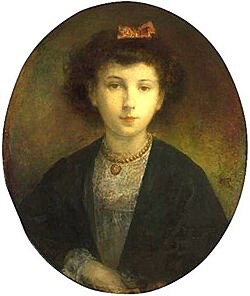
Ellen Bischoffsheim was born in London in 1857, the daughter of the Jewish banker Salomon Hayum Bischoffsheim. She came to Kilkenny through her marriage to William Cuffe, the 5th Earl of Desart. Following her husband’s early death in 1898, she did not use her immense inheritance to lead a secluded life in high society, but instead invested it with unparalleled passion in the economic and cultural revival of Ireland.
Whilst the Countess of Desart promoted the cultural revival from the heights of philanthropy, a process no less significant was taking place at grassroots level. From the 1880s onwards, the wave of Tsarist pogroms in the Russian Empire drove thousands of Eastern European Jews – so-called Litvaks from Lithuania and Poland – to Ireland. Many of them settled in Dublin (where the neighbourhood around Clanbrassil Street soon became known as ‘Little Jerusalem’) and in Cork.
For these Jewish immigrants, the Gaelic language revival was by no means a foreign concept. On the contrary: they came from a culture that, through the Haskalah (the Jewish Enlightenment) and the emerging Zionist movement, was undergoing precisely the same process – the revival of Hebrew from a purely sacred written language into the living, everyday language of a people in the process of reconstituting itself.
Where there is much light, there are also shadows. Whilst Jewish citizens and Irish cultural figures were drawing closer in Dublin and Kilkenny at the turn of the century, January 1904 saw the darkest events in the history of Irish-Jewish coexistence unfold in Limerick: the so-called Limerick pogrom or Limerick boycott.
The Jewish community in Limerick was small – at that time it numbered around 150 people, mostly destitute immigrants from Lithuania who had painstakingly built a livelihood for themselves as pedlars or small traders. They often sold clothing and household goods on hire purchase to the impoverished Catholic working class.
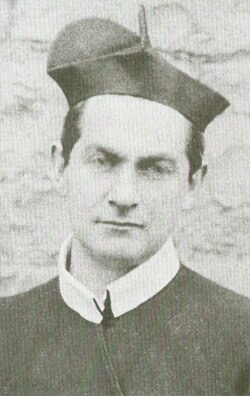
The spark was ignited by a Redemptorist priest named John Creagh. In a series of inflammatory sermons at the Redemptorist church, he resorted to the oldest anti-Semitic stereotypes: He accused the small He accused the small Jewish traders of usury having come to ‘suck the blood out of the Irish’, and linked economic envy with early Christian anti-Judaism. Creagh explicitly called on the population to sever all business and social ties with Jews.
The consequences were devastating. Although – unlike the bloody pogroms in Tsarist Russia – no murders took place, the economic and social impact was brutal:
Jewish traders were harassed, verbally abused and, in some cases, pelted with stones in the streets.
Catholic customers refused to settle their debts with Jewish traders or to continue shopping with them.
The small community’s economic livelihood collapsed completely within a few months. More than two-thirds of Jewish families were forced to leave Limerick; many of them fled on to Cork, where they were welcomed with open arms.
The reaction of the Irish public and the stance of Arthur Griffith
However, the events in Limerick are particularly revealing from a historical perspective because the reactions to them laid bare the divided nature of the Irish national movement at the time.
On the one hand, there were fierce protests against the agitation:
Leaders such as Michael Davitt– the founder of the Irish Land League, who had personally documented the Tsarist pogroms in Chișinău – publicly and uncompromisingly condemned the boycott as a disgrace to Ireland.
Similarly, both Protestant and enlightened Catholic citizens in Limerick and Cork rallied to the defence of those affected.
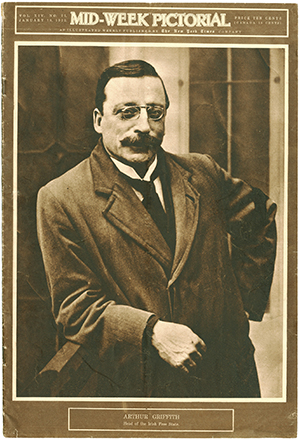
On the other hand was Arthur Griffith, the founder of the newspaper The United Irishman and later founder of Sinn Féin. Griffith initially defended the calls for a boycott vehemently in his articles from 1904 and 1905. From today’s perspective, Griffith is therefore often broadly labelled as a purely racist anti-Semite. However, a closer look at the primary sources reveals a deeper, albeit disturbing, historical dynamic:
Griffith’s early stance did not stem from pure biological racial hatred, but from his obsessive economic nationalism. In his theory of Sinn Féin (‘Ourselves’), he posited that Ireland could only defy the British Empire through absolute economic self-sufficiency. He viewed foreign traders and middlemen – as he mistakenly perceived the Jewish pedlars to be – as a disruptive element in this self-sufficient economic cycle. Furthermore, he feared that the Jewish minority might, out of pragmatism, come to terms with the British Crown.
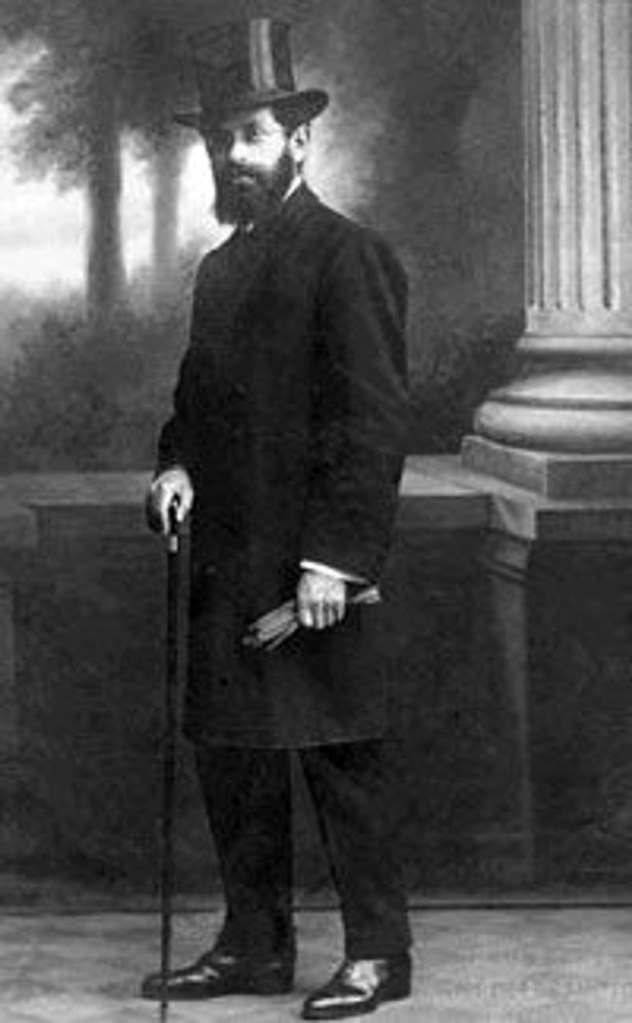
Through direct exchange with leading figures of the Jewish community in Dublin – most notably the future Chief Rabbi, Yitzhak HaLevi Herzog – Griffith fundamentally revised his prejudices. He came to realise two crucial things:
Irish Jews were not henchmen of British imperialism, but were committing themselves with immense loyalty and enthusiasm to the Irish struggle for independence.
Zionism – the Jewish people’s quest for national rebirth, their own language, and state sovereignty in Eretz Israel – displayed striking parallels to his own vision for Ireland.
Griffith began to study the writings of Theodor Herzl and soon publicly praised Zionism as an exemplary model for the Irish liberation struggle. When he led the Irish delegation in the negotiations for the Anglo-Irish Treaty in London in 1921 and became President of Dáil Éireann in 1922, he maintained close, warm friendships with the Jewish community.
The Limerick boycott of 1904 remains a dark chapter. Yet historical reality also demonstrates how the fruits of mutual respect and Zionist-Irish dialogue ultimately overcame the anti-Semitic agitation of a single priest.
The evolution of a statesman
What modern activists and superficial social media narratives completely ignore, however, is the remarkable evolution in Arthur Griffith’s thinking in the years that followed.
Through direct exchange with leading figures of the Jewish community in Dublin – most notably the future Chief Rabbi, Yitzhak HaLevi Herzog – Griffith fundamentally revised his prejudices. He came to realise two crucial things:
Irish Jews were not henchmen of British imperialism, but were committing themselves with immense loyalty and enthusiasm to the Irish struggle for independence.
Zionism – the Jewish people’s quest for national rebirth, their own language, and state sovereignty in Eretz Israel – displayed striking parallels to his own vision for Ireland.
Griffith began to study the writings of Theodor Herzl and soon publicly praised Zionism as an exemplary model for the Irish liberation struggle. When he led the Irish delegation in the negotiations for the Anglo-Irish Treaty in London in 1921 and became President of Dáil Éireann in 1922, he maintained close, warm friendships with the Jewish community.
The Limerick boycott of 1904 remains a dark chapter. Yet historical reality also demonstrates how the fruits of mutual respect and Zionist-Irish dialogue ultimately overcame the anti-Semitic agitation of a single priest.
Shoulder to shoulder: How Jewish communities supported the Irish cause
When Ireland fought the British Crown in the War of Independence between 1919 and 1921, it was not merely a military conflict on the island, but a global diplomatic and financial battle. On both fronts, Jewish figures and Zionist networks played a pivotal role in advancing the Irish cause.
The transatlantic alliance: De Valera, Brandeis, and Zionist lessons
When Éamon de Valera travelled to the United States in 1919 to raise funds for the Dáil Bonds (the loans of the self-declared Irish Republic) and seek political recognition, he found his strongest allies among Jewish-American and Zionist leadership circles.
Leading American Zionists – most notably US Supreme Court Justice Louis Brandeis and Rabbi Stephen Wise – viewed the Irish struggle against the British Empire as a direct parallel to the Zionist quest for self-determination in Palestine.
The Zionist movement in the US even served as an organizational blueprint for Irish representatives:
Financial networks: Irish-American organisations, such as the Friends of Irish Freedom, adopted methods from the Zionist Organization of America (ZOA) to effectively raise funds.
Operatives on the ground: Arms, safe houses, and forged passports
In Ireland itself, the support of the Jewish community was by no means limited to sympathetic words. Jewish citizens risked their lives in the underground struggle of the Irish Republican Army (IRA):
The network in ‚Little Jerusalem‘: The Jewish working-class population in Dublin’s Clanbrassil Street opened their homes as safe houses for IRA fighters on the run. Notable figures such as A.J. ‚Chaim‘ Leventhal supported the Dáil cabinet apparatus, while Jewish printing presses produced illegal republican pamphlets and passports.
Medical care: Jewish doctors in Dublin treated wounded IRA men in secrecy without informing the British military authorities.
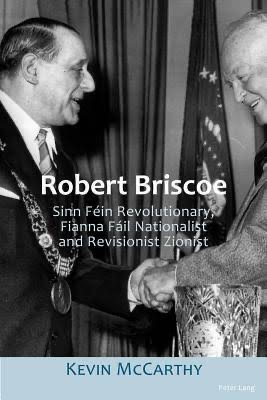
When the truce was declared in 1921, the gratitude of the Irish leadership was unmistakable. It was no coincidence that figures like Robert Briscoe later became founding members of Fianna Fáil and held top offices in the Republic for decades.
Anyone who claims today that Irish independence was a purely Catholic-Gaelic achievement standing in natural hostility to Zionism grotesquely distorts the historical record. The Jewish community did not stand on the sidelines – it fought, financed, and bled for a free Ireland.
The Irish model as inspiration for Zionism – And the ‚Sinn Féin Rabbi‘
Mutual inspiration went far beyond logistics and fundraising drives. For many leading figures of the Zionist movement in the early 20th century, the Irish liberation struggleserved as a primary case study of how a small, oppressed nation could reclaim its statehood and culture against a world power.
Linguistic and cultural revival: The Gaelic language revival served as a direct example of how a historically suppressed language could be re-anchored among the people – a parallel that Eliezer Ben-Yehuda and other pioneers of modern Hebrew closely observed.
Tactical methods: The uncompromising refusal to cooperate with colonial authorities, as well as methods of both passive and active resistance, informed debates within the Zionist leadership in Mandate Palestine.
Rabbi Yitzhak HaLevi Herzog: The Republic’s bridge-builder
Appointed Rabbi of Belfast in 1916 and the first Chief Rabbi of the Irish Free State in 1919, Herzog was by no means a detached observer of political upheaval. He learned Irish (Gaeilge) fluently, openly supported the Irish struggle for independence, and maintained close, warm friendships with Éamon de Valera and Michael Collins. Due to his tireless devotion to the republican cause, he became affectionately known in popular parlance as the ‚Sinn Féin Rabbi‘.
During the War of Independence, Herzog used his religious office and network to provide sanctuary to Irish insurgents and to mediate diplomatically between the conflicting parties. His posture was rooted in the deep conviction that the Irish desire for freedom and the Zionist quest for a Jewish homeland were two sides of the same coin of universal justice.
The legacy: From Belfast and Dublin to Jerusalem
This Irish-Jewish symbiosis left a lasting mark on the history of both nations:
If the founding era of modern Ireland was marked by such a deep symbiosis between Irish Republicans and Zionist pioneers, how did the deep chasm that opened up between Dublin and Jerusalem in the decades following the Second World War come about?
During the 1940s and 1950s, the Irish Department of External Affairs defined its position in the Middle East almost exclusively through the directives of the Holy See:
Clerical concerns over geopolitical analysis: Irish diplomats regularly consulted with the Papal Nuncio in Dublin before making decisions regarding the Middle East. The fate of the State of Israel was not treated in government circles as a question of national liberation, but primarily deliberated as a Catholic-theological and ecclesiastical issue.
This dependency led to the paradoxical historical outcome that the very Irish politicians who had consistently fought for the absolute sovereignty of their own Republic allowed their Middle East policy to be dictated by Rome’s pulpit diplomacy for decades. Only with the secularisation of Irish society and Ireland’s accession to the EEC in 1973 did Dublin gradually untether itself from this clerical guardianship.
Conclusion: Today’s historical amnesia
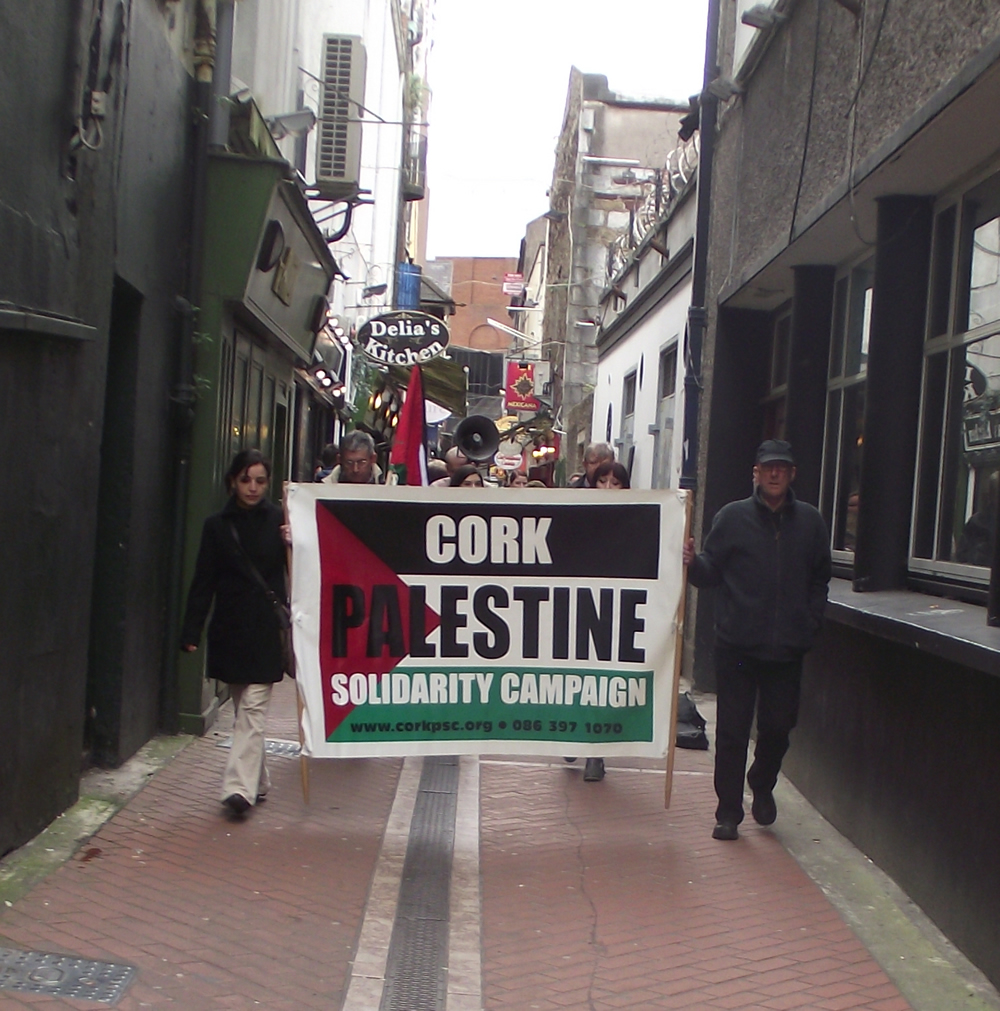
When activists from the Irish Palestine Solidarity Campaign (IPSC) or the BDS movement march through the streets of Cork and Dublin today, storming supermarket shelves and framing the State of Israel as an irreconcilable enemy, they do so in the belief that they are adhering to a „deeply rooted Irish tradition“.


Hinterlasse einen Kommentar